The Expert Guide to Writing Perfect Blog Posts that Rank Higher & Convert Readers.
Write, Rank & Convert
⏱️ 20-minute read
This post is for you if:
You’ve been writing blog posts, but don't seem to go anywhere.
You publish content you're proud of and have visitors who don't seem to take action.
You've followed SEO advice, but still struggle to convert readers.
You wonder why some blogs rank and build loyal audiences while yours feels stuck.
You want to write quality blog posts that actually satisfy readers and search engines.
Writing a blog post has never been just aboutputting words on a page.
When I wrote my
first
I spent 3 months preparing for this 🥲 with about a thousand courses. blog post, I wanted one thing. To see it rank and convert. And it did. But not until I learned something that completely changed, how I approached content and the blogging world in total.
Looking back at how well my blog performs in search engines today, I still feel nostalgic about the days I almost gave up. The days I kept asking myself, “If my writing is good, then why am I still stuck?”. However, I hadn't realized that ranking was not even a third of the job. It was as a matter of fact, just a
tip
Think of promotion, email marketing, service provision, writing schedule, consistency 😮💨 List is almost endless!of it.
The real difference between a blog post that survives and one that disappears is what happens right after the click. So, when I wrote this post, I had one person in mind, you.
After seeing the chaos and
confusion
about AI 🤖, plug in 🔌 or handwritten ✍️content for quality around blog writing on Quora and Reddit, I realized just how many people were actually struggling with the same questions I once had. So, I decided to put this post together, to teach you what took me four months to learn, in just twenty minutes. I'll also give you the secrettreasure, I rarely see other writerstalk about yet, it was the single shift that changed everything formany successful
Top ranking blogs with millions of web traffic and daily conversionbloggers out there and me too.
By the end of this guide, you’ll know how to create blog posts that not only rank on search engines, but also genuinely engage readers and drive action.
Now, before you dive in, I'm pleading with you to grab a
cup
☕ to help you digest as you read of coffee and settle in because, this isn’t a shallow “10 tips” post. It's a full roadmap and a step-by-step guide to creating content that ranks, converts, and grows your blog while you're asleep, even if it's a Blogger blog.
Most blog posts can fail, even when they’re optimized
A “high-quality” blog post is a post that satisfies the reader's intent to the fullest, ranks well, and is capable of converting.
You need to combine SEO, copywriting, and emotional writing to create content that converts
Write blog posts that serve your audience well then structure and optimize them to rank.
This post contains affiliate links. If you buy through them, I may earn a small commission at no extra cost to you. To understand more about our blogs and how it works, see our terms and conditions.
Why do Most Blog Posts Fail and How can Yours Make a Difference?
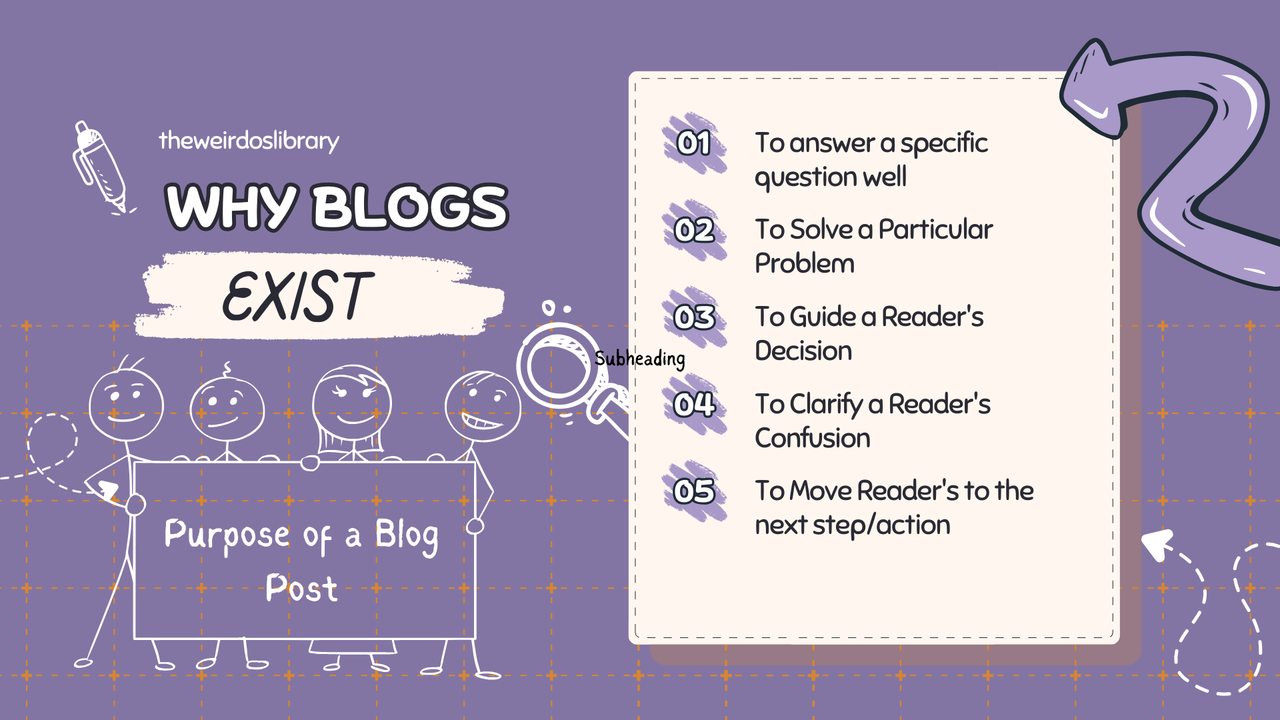
Essentially, the purpose of a blog post must be understood in the first place for a difference to be truly made. So when you feel like, 'Oh! I know what a blog is', it's not just about knowing it, it's about understandingitand why it's there. Every blog post is written to do one or more of the following:
✓Answer a specific question
✓Solve a real problem
✓Clarify confusion
✓Guide a decision
✓Move the reader next
step
Which could be anything from self improvement🌱 to purchasing a product🛒
So, when a blog post is written with the mindset
the passion to write, quality & performance of your blog post begins here. So you need to cultivate a positive one 😌 of “let’s just put something out there today” or “let’s publish more to grow traffic,” it struggles to perform.
Not because, consistency doesn’t matter, but because the post was created without intention. It exists simply, focused on quantity rather than, solving a real problem for the reader.
To write a blog post that is at least good, you must rephrase your purpose into questions for your intent and the reader's benefit. Ask yourself, "How can I answer a specific question well?", "How can I actually solve this reader's problem?"
Most blog posts fail not because the writer is untalented or lazy, not even because the blogger isn't doing
enough
Writing long articles/posts, optimizing SEO, using right keywords 😗, sadly.
They fail because they’re horribly
disconnected
readers don't feel🤧 the writer's words and why they need to take the next action instantly from both the reader and the reason the post exists in the first place.
Some are written purely for Google, stuffed with keywords, optimized to death, and empty of meaning. Others, are written only from the heart, emotional and thoughtful, but invisible because they ignore how search engines actually work.
A blog post is not a diary entry, and it’s not a robot checklist or a salesy pitch piece. It’s a conversation with intention, except this one's digital.
So, while most writers begin with what they want to say,successful blog posts start with what the reader needs to understand, feel, or even do next. That's it! That's what majorly makes the difference and tells whether or not a post would rank, convert, or quietly disappear into the internet.
📝Note
There are two crappy mistakes that hurt a blog the most, chasing rankings without earning attention and writing beautifully with no structure or strategy.
Ranking brings traffic as we all know, but a million visitors a day with no conversion is just a noise. The choke point
You know that feeling as a beginner where you just published a fresh blog post and check your mail and analytics a thousand times a day in a week but see no new visitors🥲here, is that the readersskim, bounce, and forget you ever existed.
Also, your words might be diamond, but without clear intent, they don’t guide the reader anywhere. It's the balance most blogs ignore, that makes the true difference and determine how well a blog scales in the hearts of the readers and the algorithm of the systems.
Everything You Must Understand Before you Even Write a Worthy Blog Post
In this section, you'd be expecting the regular endless preachings about keywords, SEO and structure. But, this is right here, is exactly where the
issue
The fact that SEO, Keywords & optimization only contribute about 40% of the ranking process in question and 10% of the conversion process😬 is.
Before keywords, headlines, or even SEO plugins and formatting, there’s one thing that matters more than anything else and it's clarity.
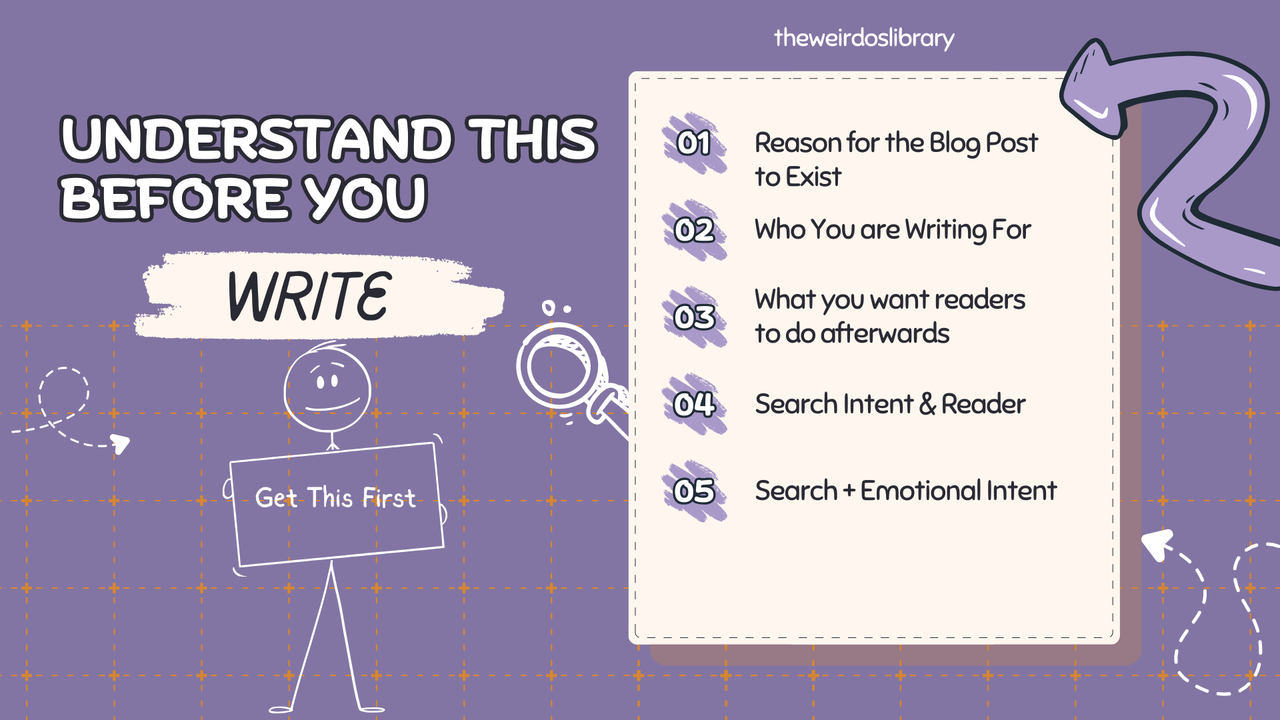
A high-performing blog post is not written impulsively or SEO optimized. It’s notcreated because “it’s time to publish” or because consistency demands it. It’s written because there is a clear gap, a clear question, or a clear problem that needs to be addressed. So, before you even set your fingers at a pen or keyboard, you must have these 3 essentials in mind.
1. The Reason for the Post to Exist.
Nobody wakes up one morning and just starts typing away furiously on a laptop. There must be a why. To clarify this, here are three questions you need to ask for any blog post.
✓ What problem does this solve?
✓ What confusion does this clear up?
✓ What question does this answer better than what already exists?
If you can’t clearly articulate why the post exists, then neither Google nor your readers will understand its value.
2. Who You Are Writing For
Effective blog posts are written for one specific reader in one specific state of mind. Notice the key here? Specificity. You're nothere to address a crowd of a people, you're here to address a person's problem, not beginners and experts at the same time and definitelynoteveryone who might stumble across it.
When you know exactly who the post is for, example, is it a beginner?An expert? A puzzled person etc, your writing becomes sharper, your examples more relevant, and your advice even more actionable.
3. What You Want the Reader to Feel, Understand, or Do Afterwards
This is the part that does the work of converting the readers to subscribers, fans and supporters.
Before you write, decide,
✓ What should the reader understand by the end?
✓ What belief should shift?
✓ What action should feel natural to take?
Put this down in a piece of paper because I'd swear you'd need it someday
Someday?🤔You'll need it before you write your blog posts.
Clarity not only shapes your structure and your tone it positivelyaffects even your word choice in a way that is healthy to the reader.
When these foundations are in place, writing becomes easier. SEO becomes clearer. And your content stops feeling scattered. Because at this point, you’re not just writing a blog post, you’re buildingsomethinggenuine and actually helpful. Which is why it is crucial to grasp this before you even resume writing on your blog.
The Search Intent and the Reader
"People don’t buy what you do; they buy why you do it.”
— Simon Sinek
Search intent is not about keywords alone. It’s about understanding why someone typed that query at first.
Every searchrepresents a person in a specific moment, confused, curious, overwhelmed, or ready to act. When your content matches that moment, Google notices. When it doesn’t, no amount of optimization can save the post. The threetypes of search intent you must recognize are:
1. Informational Intent
Just look at the beginning of it, "info". Info's all about, what your readers can learn from your posts. Here, the reader wants to understand something. They’re asking “what,” “why,” or “how.” Clarity and depthmatter much more than persuasion in this case.
2. Navigational Intent
This "branch" of readers are those trying to find something specific, for instance, a brand, a tool, or a known resource. They don't want to "learn" about something, they want to "know". They don't need a lecture, they need advice. Precision and relevance are the keys in this particulartype of intent.
3. Transactional or Action-Oriented Intent
Here, the reader is ready to act. They want recommendations, steps, or solutions. This is where conversion becomes possible, but this is only if trust has already been built.
Writing without identifying which intent you’re serving often results in posts that rank briefly or not at all.
When you align search intent with reader awareness, your blog post stops feeling generic. Again, intent helps engines know just who to feed your post to and not dip a spoon of cornflakes in the mouth of a baby who still needs milk.
Search Intent + Emotional Intent: The Overlooked Power Combo
Alright, alright, I know other people tell you. Cut the content! Readers skim and get tired which is true but do you just want to answer a questionand move on or truly help someone solve a problem deeply?
Search intent tells you what a reader is looking for. Emotional intent tells you how they feel while looking for it.This shouldn't be ignored because even if a reader gets an advice but still leaves feeling stuck, worried or unsatisfied, you risk loosing a potential client, customer or fanin the form of a reader.
Most blog posts stop at the first layer.
They answer the question, provide information, and move on, but they ignore the emotional state that brought the reader there initially. Yeah, because, in today's world being too emotional seems to signal weakness. But here's the
trick
the part most people don't see 🧐: Emotions actually drive action. A person can arrive at a post sad or angry or stuck and how you speak or write, can determine whether or not they subscribe to your email, even if you provide quality. This is why so much content feels correct, yet forgettable.
Imagine this, three people, searching the same phrase but with completely different emotions:
One feels confused and overwhelmed
Another feels confident but stuck and then there's one that's skeptical and cautious, probablybecause they've made regrettable mistakes in the past.
If your content only answers the question but ignores the feeling, it creates a subtle gap, which retains an empty feeling in the mind of a reader.This leaves ablog at the top but forgettable. Remember, I'm trying to give you the secret to a lasting conversion.
Why Emotional Intent Changes Everything
Emotional intent determines how patient a reader is, how much detail they need, if they trust the advice and whether or not they take action. A beginner searching for guidance needs reassurance and clarity.
An experienced writer searching for refinement needs precision and respect for their knowledge. When your writing acknowledges both the search and the emotional intent, readers feel understood, not marketed to. It's important to note that content that makes readers feel understood is content that actually performs and impresses the big guy almost every blog needs, "Mr Conversion".
So, What Does This Means for Your Blog Posts?
High-performing blog posts are not written to keywords alone. They are written to people in moments of uncertainty,curiosity, or decision-making. When you wisely align a clear search intent, with quality content, emotional awareness and purposeful structure, your content stops feeling generic and starts feeling personal, without being sentimental
One of the best tones for a blog post, is a friendly but serious tone🙂.
This is basically the difference between, posts that rank briefly and posts that build trust, loyalty, and long-term growth.
💡Tip
Take a pen and a paper, put down all the important questions, you've found above in this blog post because you'll so damn need to answer them before you write any blog post to achieve clarity
The Real Definition of a High Quality Blog Post
When I visited Quora and Reddit some four days ago, here are some of the shocking
because all of a sudden, there's a question about a plugin that creates quality content. What happens to the emotion and depth that drives readers in the first place? 😆questions I met, that actually left me chuckling about how much beginner bloggers need to learn about content.
First user on Reddit went:
Is there a plugin for quality content or something that actually makes people write quality content for their blogs?
Alright, no dear. Quality content actually comes from you and your desire to actually solve reader's problems with your writing. There's no plug-in that makes your sentences drive more meaning or change the personality of what you write to make it more human, you also definitely, write the outline. You can decide and write, by hand, for a bit more creativity everything your reader needs to have this question answered to optimal satisfaction. Then, you write about it.
What are the best AI tools for writing quality blog posts content?
With a brief sigh, I remember generously tapping my phone's screen, "quality content isn't for AI to create, it's for you to map out and write with the aid of AI. So, no!AI won't make your blog sound like you and it most certainly won't create the kind of outline you would create if, let's say a loved one
I used that because that's how genuine your posts need to sound for maximum impact🙃, asked you for a detailed answer to a question. Which is why quality content is yours and yours alone to create"
A dozen more questions that day, and I knew, I really needed to define what quality actually was on my next blog post.
Here are some of my favorite quotes that have really inspired me to write great content which you can take a bulb from too.
"Content is king.”
— Bill Gates
(From his 1996 essay on the future of the internet)
Then there's the classic Ann Handley's quote from the best-selling book about content that has transformed the lives and content of thousands of bloggers.
"Good content isn't about storytelling, it's about telling a true story well"
— Ann Handley
A High Quality Blog Post and Why Must you Understand it's Definition Even if you Already Know What It Is?
Now, every blog is written with one aim, to inform and two sub aims for most other blogs, which is to rank and convert readers into subscribers, customers, or loyal followers. A high quality blog post, does allthree effortlessly.
In other words, a high-quality blog post is not just words on a page, facts strung together or a recycled idea dressed in new wording. It is a post that, educates or solves a problem, leaving the reader satisfied, appears prominently in search results, because it matches intent, is well-structured, and provides real value.
It also engages and inspires action, whether that’s subscribing, sharing, or applying what has been learnt.
Understanding this is critical, even if you think you already know what a high-quality post is, because most bloggers focus on just one goal (usually ranking). Some even misbelief that, a high quality blog post is one that is just SEO optimized or lengthy and miss the other two.
A blog that only ranks but doesn’t convert wastes its audience. A blog that only converts but doesn’t rank is invisible to most potential readers. A blog that only informs but neither ranks nor converts… well, it’s just content floating in the void.
How to Recognize a High-Quality Blog Post
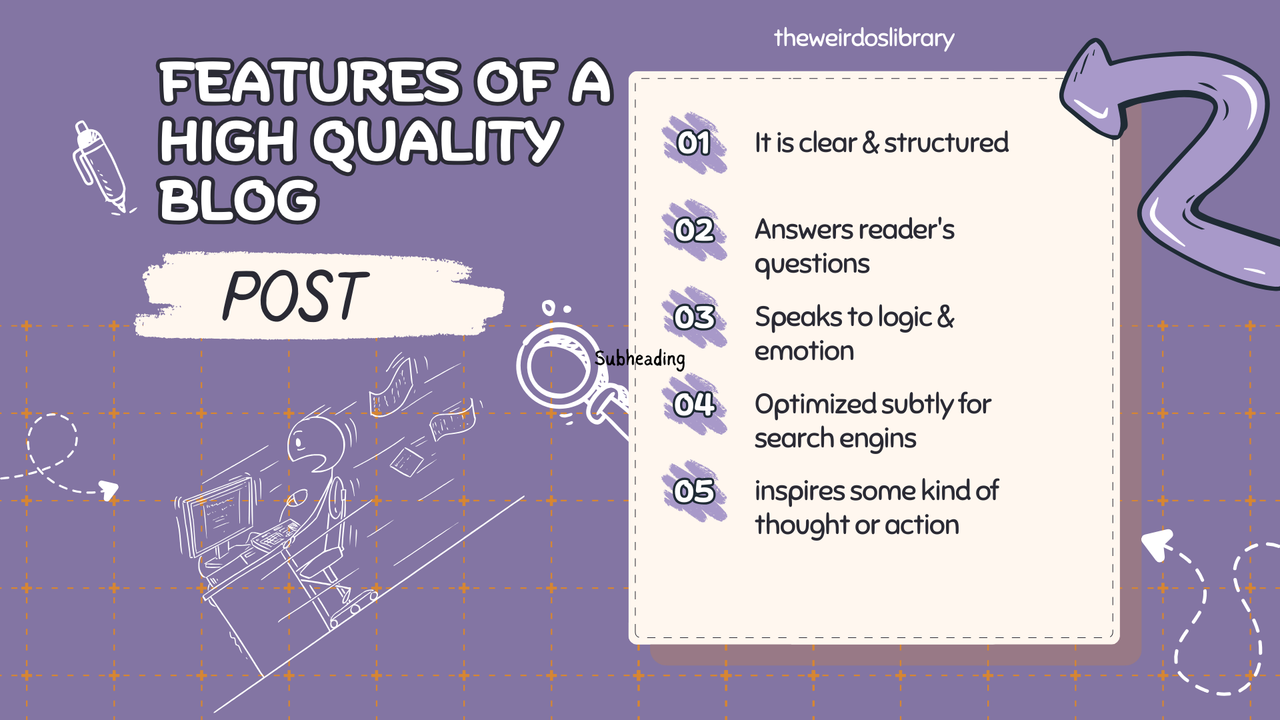
A high-quality blog post will:
✓Be clear and structured, so readers know exactly what to expect.
✓Answer the reader’s question completely, without fluff.
✓Speak to both logic and emotion, connecting with the audience on a human level.
✓Be optimized subtly for search engines, without sacrificing readability.
✓Inspire some kind of action or thought, even if it’s just a deeper understanding.
📣Warning
The worst thing a blog can ever do is to copy content from other blogs, no matter how much they need quality content.Google penalizes it. Outsourcing for blog posts on the other hand is very much allowed.
The Three Writing Skills That Put You Three Steps Ahead in the Blogging World
Some three years ago, at 16, I sat a table, while most of my mates were having midnight headaches over relationships, wondering if I could ever start a blog someday. In the afternoon, I spent my time reading and observing what most blogs did. I had a handful of content writing books at my desk at the time and I remember spending at least two hours a day, putting important things down from them as notes.
Years later, at 19, when I finally launched my first blog, all that study and observationpaid off. My very first post ranked top 2 on Google in just two weeks, hitting multiple keywords at once.
I've been blogging for close to six months now and I've come to understand that, writing a blog post that ranks, converts, and builds trust isn’t just about throwing words on a page.
It’s about mastering four key skills that separate average blogs from truly exceptional ones. In the next section, I’m going to show you exactly what they are, along with actionable tips you can use today.
1. Storytelling
This isn't just a skill my dear, storytelling in blog writing is literally your core, to make your blog postsmemorable. To make it ache in the minds of your readers, okay, maybe not ache, that's um...weird, Well, to make it stick! Even long after your readers have gone off the page.
Storytelling is more than just telling a story apparently. In blogging, it’s the skill that turns information into an experience and keeps readers engaged. A blog post without a story is like a lecture, it may be informative, but it won’t stick. Storytelling creates connection, trust, and emotion. Storytelling makes it relatable, like you're having a conversation with your reader.
So, How Can You Tell a Story in Your Blog Effectively?
Here's how to do it step by step for perfection.
Start with a hook:
Grab attention in the first sentence. A hook is literally a "Did you know?", "You won't believe this" or a "I thought this would fail but it worked" It could be a personal anecdote, a surprising fact, or a question that makes readers stopscrolling.
Introduce the problem or situation
Please, don't just yap on and on, let readers see themselves in the story. Make it relatable. Use phrases like "you" "I was at a point where" not "they", "I did", "It had been a...", etc.
Build the journey
You can do this by sharing challenges, observations, or discoveries as you tell the story. Using concrete examples, showing the transformation or lesson, like what changed, what you learnt and how your readers can apply it.
Add the takeaway or call-to-action.
This becomes the cherry on top. Don't forget to tie the story back to your blog topic and guide readers on the next step afterwards for maximum effect.
Read Books About Effective Storytelling
Now if you remember, I mentioned some books I read, that helped me out a lot in writing content. The craziest thing about writing is that writing is not just about writing like it sounds, it is about learning to write well.
I first off started off with “Storyworthy” by Matthew Dicks, which taught me to capture small, everyday moments and turn them into engaging stories while focusing on the “why it matters” aspect. You can have a little note where you put down daily wins which you can then incorporate into your blog writing when the time is right. When you're done reading "Storyworthy" You'd probably throw a party for Matthew Dicks and how this book will help you improve. Then you can return to give me a little gift for recommending it. Yes, yes, I'll appreciate. You can check it out above.
Another book, I remember completing on the 5th of October 2024 was "Everybody Writes". I took note of the date because it was so powerful, I'd spent a whole month reading it in detail just so, I wouldn't miss all the little diamonds it offered.
Makes you a pro at clarity and relatability. Handley teaches you to write with empathy and personality, so your blog feels human.
One of the best things I learnt from his book was a principle. Name, I can't precisely remember but here's the principle. It goes that when you write the next sentence, you should answer the "so what?" Or "and?" question that follows the previous sentence.
For instance, "you should start a blog because you can actually help people and earn from doing so." "And?" Or "so what?". Then you write, "when you earn and help people, you can actually build a great audience and passive income for your maintenance". Then "and" or "so what?" And cycle goes on and on. Of course it won't continue till infinity, but to a really satisfiable point.
Storytelling is not fluff or unnecessary narrative. It’s about helping readers see, feel, and understand your message by showing a them a little more about you and your experience. Stories create context for facts, tips, or advice. Emotional resonance makes your blog memorable and invite members who share, revisit, and trust you.
📝Note
Every post should have a thread of storytelling, whether it’s personal, hypothetical, or case-study based. Without it, even the best information risks being ignored.
Principles to Follow for a Quality Storytelling:
1. Show, Don’t Tell
Even fiction writers use this trick, for instance, instead of saying “Blogging is hard”, show the struggle with a story in a sentence.
“I stared at a blank screen for two hours, wondering if anyone would ever read my words.”
What does this do? It makes readers feel the experience, not just read about it.
2. Make It Relatable
Readers should see themselves in the story.
Use everyday situations or emotions, (confusion, curiosity, excitement, frustration).
For example:
Instead of saying: " I couldn't brush my teeth this morning" for instance, I ("emphasize").
Say: I searched all over for my tooth brush and I never found it. I was running late for school, so I did what those missing a toothbrush for one morning would do.
Relatable content builds trust.
3. Keep a Clear Arc
Even short stories need a beginning, middle, and end.
Start with a hook, then move to the show struggle or challenge and resolve it with insight or lesson. For instance, don't say
"I made $30k in 1 night of blogging"
Instead, say:
"I blogged for two years but I never knew I was missing one key secret and right after reading this book, my blog got 2000 subscribers and made me over $30k in one night"
4. Use Emotion Strategically
Readers remember how you made them feel more than facts.
Humor, suspense, empathy, surprise, sprinkle in ways that support your message. Example: Use a quirky or personal tone when telling your story, etc.
5. Be Concise
Storytelling doesn’t mean endless paragraphs.Every line should either advance the story or reinforce the lesson and not just write or be written.
6. Micro-Stories Work Wonders
Even one or two sentences can be a mini story inside your blog.
Example:
“Two years ago, my first post went unnoticed. Today, that same post ranks top 3, and here’s what made the difference.”
7. Anchor Stories to the Lesson
Always tie the story back to your blog post goal (inform, rank, convert).
Never tell a story just to fill space, like I said at the beginning.
8. Use Names, Details, & Sensory Words
You can write “My laptop froze at 11 PM while I sipped cold coffee” which is much greater than plain old “I struggled with blogging”. Why? Because all those tiny details make your story visual and memorable.
9. Layer Stories Over Data
Blend storytelling with statistics, tips, or actionable advice.
People always remember the story first, then the lesson.
10. Test & Iterate
Observe which stories resonate: check engagement, comments, and shares.
Over time, you’ll know which types of stories your audience loves most.
💡Tip
Always ask yourself:“Will this story make the reader feel something and learn something?”
2. Copywriting
Copywriting
and please I do "not" mean the copying writing or the legal enemy to that🤦🏽♀️, I mean writing copies that sell!💁🏽♀️(for those new to the word) makes your writing go from "You can do this and improve" to "Improve right now! Just do this!". It helps to turn words into action especially for readers who always need something to click.
Storytelling grabs attention, but copywriting makes your readers act. It’s not about psychologically tricking people, it’s about writing in a way that motivates, persuades, and guides your audience while still providing irresistible value.
A blog that informs but doesn’t persuade is like a car without gas, believe me or not, it’s going nowhere. Copywriting is the fuel that makes your readers click that button.
Step-by-Step Copywriting for Blogs
1. Start with the reader in mind
Know exactly what your audience wants, fears, and desires.
Every sentence should answer the question: “Why should I care?” It should help readers genuinely. For instance, ensures that you
use a clear, benefit-driven language
Instead of: “This post explains SEO basics”
Try: “Learn the exact SEO steps that get your blog posts ranking fast.” Twist words like a ranger until you find just the perfect set.
2. Write scannable content
Use subheadings, bullet points, and bold keywords. This calls for an excellent content structure.
Readers skim more than they read, so make it easy to absorb.
3. Include subtle calls-to-action
Encourage engagement without being pushy. Examples:
“Try this tip in your next post.”
“Notice how this strategy changes your rankings.” etc
4. Test different tones and angles
Try out being friendly, authoritative, playful, see what resonates with your readers.
I'll drop the king of all copywriting books below, you can pick a copy and if you're a procrastinator like me, then a month or two is just enough to finish it up and get all you need to write content like a pro. You can also keep it under your pillow and read a page or two every night before bed (just suggesting!). It's better than dropping and forgetting it on a desk, at least, common! Here it is:
A classic, practical guide on persuasive writing and conversion-driven copy.
5. Use emotional triggers wisely
Make it curious, urgent and highly valuable. Thisworks best.
Avoid jargon, write like a real person talking to a fellow person.
Ensure you anchor every persuasive statement in value, never manipulate, always guide.
Combine with storytelling (stories + copywriting = reader feels and acts)
📝Note
Your blog posts shouldn’t just be read, they should move readers to think, feel, or do something. That’s copywriting in action.
Copywriting Formulas and Principles Every Blogger Must Know
Copywritingisn’t random words that sound convincing. It’s based on tested formulas and principles that guide readers from curiosity to engagement and action.
What works best for blogs:
1. AIDA (Attention, Interest, Desire & Action)
Attention: Hook them immediately through them headline, first line, or story.
Interest: Give them something valuable, relatable, or surprising.
Desire: Show how your solution or insight improves their life.
Action: Tell them what to do next (readmore, subscribe, apply the tip).
Example:
Attention: “Most blogs fail [Hook] within a year[Interest] here’s why [desire]”
Interest: “It’s not lack of content, it’s missing strategy.”
Desire: “Follow these steps and see your posts rank while converting readers.”
Action: “Try these tips in your next post today.”
2. PAS ( Problem, Agitate & Solve)
Problem: Identify the reader’s pain.
Agitate: Make them feel the problem (without fear-mongering).
Solve: Offer your solution clearly.
Example:
“Struggling to get traffic?[Problem] Most bloggers don’t rank because they ignore intent [Agitate]. Here’s how to fix that in 3 easy steps[Solution].”
3. FAB (Features, Advantages & Benefits)
Features: What your product/service/tool offers.
Advantages: Why it’s better than alternatives.
Benefits: How it helps the reader personally.
Example:
“This content calendar (feature) helps you plan every post in advance (advantage), so you save hours weekly and grow your audience faster (benefit).”
There are also laws every copywriter lives by which includes:
Clarity beats cleverness
Never confuse your reader. Simplicity gains trust.
Benefits over features
Readers want results, not descriptions.
Emotion drives action
People remember how they felt, not just what you wrote.
Specificity is persuasive
“3 steps” are always greater than “a few tips” because it's specific and tells the reader just how much they need.
Numbers, data, and concrete examples also reinforce credibility
The Read Aloud test which goes basically as the name sounds. Right after writing your blog, you read it aloud to yourself to see if it makes sense. If it doesn’t sound natural when spoken, it won’t connect on the page.
💡Tip
Combine the formulas AIDA + PAS, or FAB + storytelling depending on the type of blog post. That’s how top bloggers create posts that rank, convert, and stick in readers’
3. Emotional Writing
This over here is the main reasonI wouldn't even advice you to copy paste AI generated blog posts.Why? Because they don't connect, they're too generic and too perfect. Meanwhile, relatable posts come with quirks. You need to inject your personality into your posts for readers to get you. AI won't do this for you because it doesn't have your personality.
Emotional writing is one that actually connects with readers on a human level.Storytelling gets attention because yes, you're telling me something that happened which is real right? Copywriting guides action because it encourages you to do the next thing right? But emotional writing, is what makes readers remember you, trust you, and come back again. It is writing in a kind way that indirectly speaks to how your reader feels.
A blog post can be technically correct, structured perfectly, and optimized, yet still feel cold, distant, or forgettable. That’s because people naturally, read with feelings first and logic second. Emotional writing speaks directly to the heart and the mind. It makes your reader nod and say "Ah! Finally! Thank you for your kind words, let's see what I'll do next"
When readers do this regardless of how they feel at the moment, they get obliged to subscribe, join your membership or even pay for a service.
This is the power of emotional writing which is not like copywriting or storytelling. Remember what I said in combining the search intent and emotional intent?Emotional writing is the practice of:
Acknowledging how your reader feels,
reflecting their internal thought process and using a language that resonates deeply, inspiring confidence, relief, curiosity, or hope. This is virtually the secret of your motivational speakers.
It doesn’t mean being dramatic, it means being authentic and relatable.
Step-by-Step Guide to Emotional Writing
1. Identify the Reader’s Emotional State Based on the Situation.
Ask yourself before you write:
Are they overwhelmed, anxious, curious, frustrated? How does this situation exactly feel to them?If so, what should I say to them?
Example:
“If you’ve ever published a blog post only to hear silence, you’re not alone, I’ve been there before and I know just how it feels [then a little explanation of how you got over it before the full blown write up and notes]”
This acknowledges the reader’s feeling before offering any logic. It tells them you understand them because you know what it feels like. The effect? An instant calm, trust and hope.
2. Use Emotionally Charged Language With Purpose
Good emotional words go beyond facts or just quotes.
Relief and "finally, at last". Hope and "imagine, what if". Frustration and "you’re stuck, you’re tired of this". Confidence and "you’re closer than you think, you can do this"
Notice how these aren’t dramatic, they mirror the reader’s experience and let's the reader know that you see them.
3. Pause for Thought
Short emotional breaks in long content help readers stay connected and prevents them from feeling like they're being rushed with what you say or write.
Example:
…and that’s when I realized something essential. You really matter. So, does your voice too.
These mini pauses deepen engagement and allow them to absorb mid-speech.
4. Use Vulnerability Wisely
Sharing small, real struggles makes you human and shows you have empathy for what they're going through and actually care about helping them solve their problem.
For instance,
I remember the nights I stared at a blank screen…
This isn’t “oversharing”, it’s empathy working, building long-term trust.
Emotional Writing Principles That Never Fail
Speak to the person, not the audience. One reader in your mind always beats a vague “everyone.”
Match tone to topic
Technical? Be calm and reassuring.
Emotional? Be warm and empathetic.
Balance logic with feeling
Give the why and the feel.
Use short sentences for emotional moments. They slow the reader down, which increases impact.
There are two books I read in 2017 which really helped me grow this writing skill. I'll leave the links down below too, so you can get them. Don't just get them, read them!Take notes and apply the notes you've taken. That's what real learning and improvement is.
The first one is “Writing Down the Bones” by Natalie Goldberg. A classic on writing from the inside out. Goldberg teaches you to connect words with real awareness and presence which is a core emotional writing skill. You’ll also learn how to get an authentic voice, depth, connection, creative courage.
Then there's “Bird by Bird” by Anne Lamott. A gentle, wise guide to writing that matters. Lamott shows how vulnerability, grit, and emotional honesty make writing resonate. You’ll learn also learn how to embrace imperfection, findyourvoice, and write with heart.
You might be like, well I'm just writing a blog. Why do I have to
read
It's just 4 books and you don't have to finish them in two days before you write your next post😅 all those books? Remember, writing had never been just about writing, it has been about learning to do it well. And instead of getting a surface level course on blogging for $100k, getting these books and reading them will give you far more insights than any random course ever will.
This is because they help you grow with fresh pages, examples and chapters. Again they're written by professional writers with decades of experience not just 2 or even 10 years, I mean 30-40 years, even a lifespan for some. You can learn from them better, and improve.
📝Note
Emotional writing isn’t about being sentimental.It’s about being real, empathetic, and connected, like talking to one reader who really matters to you
SEO Optimization that Keeps Your Blog at the Top
Here's how to optimize your blog post without killing it, and still retain it at the top of search engines.
Step 1: Choose the Right Keyword (Not the Most Popular One)
Before writing, you need one primary keyword. A good keyword is specific, intent-driven, and not insanely competitive. I emphasized on intent earlier, so your blog posts don't stuff keywords so much that they bomb Google.
Instead of:
Blog writing ( Damn if you ever used just that as a topic for your blog... I'd prefer to not say what happens and if you insist I do, in the bluntest way ever, you're post would be ranking last of 500+ blog posts)
To avoid that kind of nightmare, go for:
How to write high quality blog posts that rank
Ask yourself:
What is the reader actually trying to achieve in particular?
Would this keyword bring a reader who needs this exact post?
Here are some Keyword Research Tools (And What Each One Is Best At)
No single tool is “the best.” Each tool reveals a different layer of keyword fact.
Your post can be informational with conversion intent.
So your content should teach clearly, answer fully and guide gently towards action.
Step 3: Craft an SEO-Friendly & Human-Friendly Title
Your title should include the primary keyword, spark curiosity and promise value without clickbait.
For example:
The Expert Guide to Writing Perfect Blog Posts that Rank Higher & Convert Readers.
✓Clear
✓Keyword-rich
✓Benefit-focused
Here's how you can craft one.
Write down the purpose of your blog post and the type of blog post it is. These would be the core for your title once you understand it. After that, you can head over to ChatGPT to generate strong title drafts with clear and intentional prompts. When prompting ChatGPT, remember to include the primary keywords, type of blog posts (how to, list, guide or warning etc), purpose and specify outcome. Then, request multiple variation and note down the best ones.
Example of a good prompt is:
Generate 15 SEO-friendly blog post titles using the keyword “write excellent blog posts”. Ensure titles are emotionally engaging, clear, and optimized for clicks.
You can also mix formats: how-to, list, and curiosity-driven.
📝Note
Keep them under 65 characters.Google Cuts Longer titles because for crying out loud, it's a title not a paragraph for SEO sake!
Then, pick your top 3–5 favorites, not just one. After this, analyze your titles with CoSchedule Headline Studio, the thing I love about this tools is that it uses psychology and structure to assign scores to the best titles.
Check for:
Headline score (aim 70+, but don’t worship the number) aim for emotional and common word balance, clarity & skimmability as well as power words. If it scores low but feels strong, tweak it, don’t trash it. After this, you can then validate your title with AIOSEO Headline Analyzerfor perfection.
This step is the pure main polish, make sure you focus on word balance, sentiment (positive and neutral beats negative most times), length optimization and search friendliness. Test all selected titles first. If both tools agree then the title wins, if they disagree then revise wording, not the idea.
Step 4: Write a Strong Introduction (For Humans First)
Your introduction should actually acknowledge the reader’s problem, set expectations and make them want to keep reading. Google watches time on page. Humans decide in seconds.
If readers stay then rankings improve.
Step 5: Use Proper Headings (H1, H2, H3)
H1 for your our blog title (only one)
H2 for main sections/Subtitles
H3 for sub-points under each section.
This helps readers to scan easily and also helps Google understand content hierarchy. A well-structured post is easier to rank.
Step 6: Naturally Optimize Your Content
Place your keyword in the title, introduction, 1–2 headings (naturally) and a few times in the body but never force it because forcing it by clustering multiple keywords leads to keyword stuffing hurts readability and bombs Google. Natural language with empathic tone, helps rankings.
Step 7: Internal & External Linking
Internal links are link to related posts on your blog. Here's how I strategize my internal linking for optimum strategy.
Write a pillar or main blog post first and turn at least 10-12 points or subheadings into brand new topics for new blog posts.
For instance, let's say this post is about internal linking from here maybe a word "rank better" is a link to a full post on ranking and it is embedded in the paragraphs, naturally. This helps Google crawl your site and keeps readers engaged longer. It's just like turning your blog into an entire textbook, where one chapter leads to the next.
External links on the other hand, link to high-quality, relevant sources which in turn, builds trust and authority for your blog on Google and also helps you get up the list.
Step 8: Optimize Meta Description (For Clicks)
Your meta description doesn’t directly rank because by now you're probably thinking everything on the list actually helps with ranking. Meta description affects CTR (click-through rate). Write it like a mini pitch for optimal effect, for instance:
"Learn how to write high-quality blog posts that rank on Google, connect with readers, and convert, step by step"
Step 9: Improve Readability & UserExperience
Googlereally favors content that’s easy to consume. You can't cook a whole tree at once but you can cook a whole tree if you break it up in chunks. Chunks are easier for people to consume. You can improve readability and experience by using short paragraphs, breaking up text, adding visual elements (quotes, callouts, circles ) and writing conversationally.
Ensuring pages load faster by using smaller file images unless it's a blogger blog where there's unlimited space on Google's Servers. Make your blog mobile friendly. Use a good host and get a memorable domain from Namecheap. I recommend namecheap because it's one of the easiest platforms to actually connect a DNS faster and easier in just a few clicks. I had mine up and running in no time. Good UX always leads to better SEO. I use Canva for most of my designs and I find it really worth it because it's easy to use, time saving with endless reusable templates especially for people who aren't so good at designing.
Step 10: Update & Maintain Your Content
Don't just “publish and disappear.” unless you want Google to "put you up and bring you down" again.
Update posts by improving clarity, adding new insights, updating links and expanding sections. Freshness signals help maintain rankings long-term.
How Google Actually Sees Content Today
Google doesn’t “read” your blog the way people do, but it observes how people interact with it.
At its core, Google’s goal is simple. To deliver the most helpful, trustworthy, and relevant content to users.
So when your blog post ranks, it’s not because Google likes you, and it’s because your content serves the readerwell.
⭐Extras
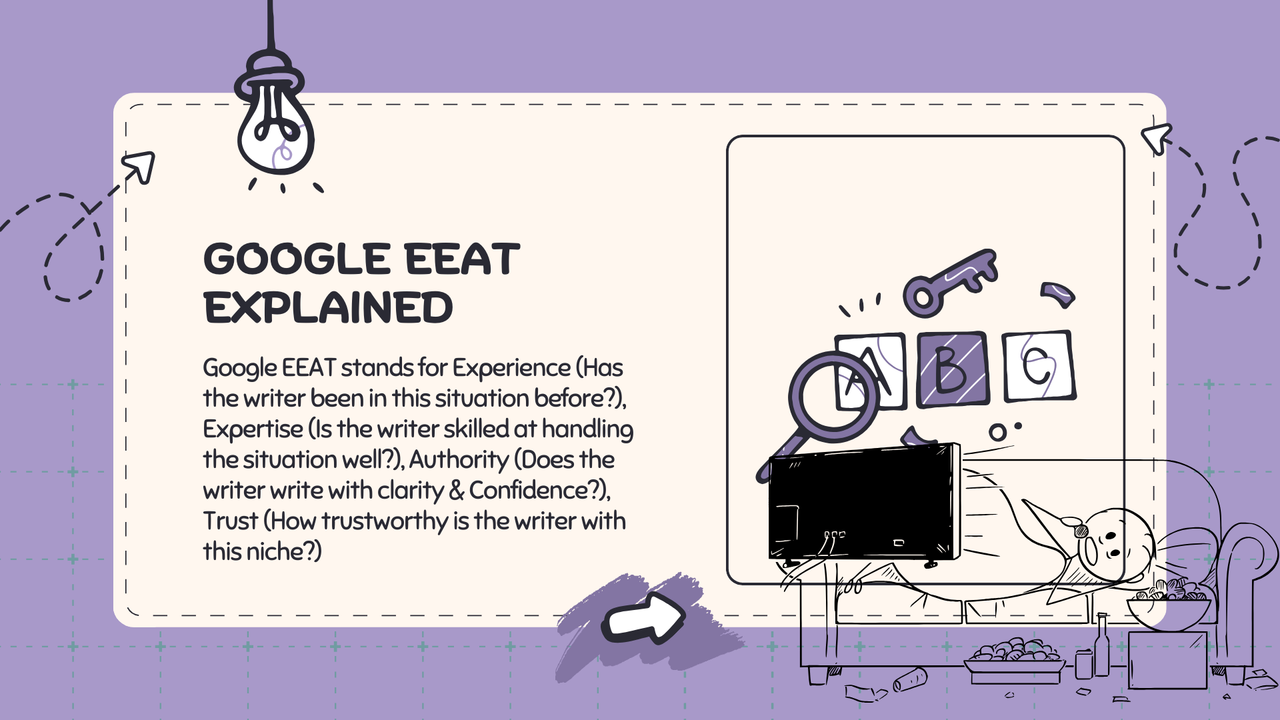
The fact most Bloggers Miss is that SEO tools don’t make Google trust you enough to put your blog at the top,EEAT does.
And EEAT is built by:
Quality content
Real experience
Consistency
Time
What EEAT is and Why it Matters?
1. Experience Have you actually done this? This one of the things Google checks for amongst a page full of words. One must:
Show Experience Share personal insights, tips, observations, or real examples. Even small stories count (like your blogging journey)
2. Expertise Do you know what you’re talking about? In this case you have to:
Demonstrate Expertise You can do this by explaining concepts clearly and avoiding fluff. Go deeper than surface-level advice
3. Authority Do others trust or reference you? This is where it is important to share your posts on other platforms.
Build Authority Interlink related posts, cover topics thoroughly over time and be consistent in your niche.
4. Trust Is your content honest, safe, and reliable? Google also checks for this in thorough scrutiny.
Establish Trust You need to use clear language, avoid exaggerated promises. Cite reputable sources when needed. Be transparent about affiliates, sponsors or services.
Here are Google’s “Unspoken Rules” for Content.
You don’t need to memorize algorithms. Just follow these principles:
✓Answer the searcher’s question fully
✓Match the intent of the query
✓Write structuredcontent clearly
✓Avoid thin or copied content
✓Be consistent over time
Google rewards blogs that help, not blogs that chase hacks and try hard to rank.
Step-by-Step: How to Write Excellent Blog Posts that Satisfy Reader & Convert.
Writing a blog post that ranks, converts, and sticks in the reader’s mind isn’t magic and there isn't any secret special formulaexcept the one I'm going to give you which is a process on it's own. Follow these steps, and you’ll see results faster than you expect.
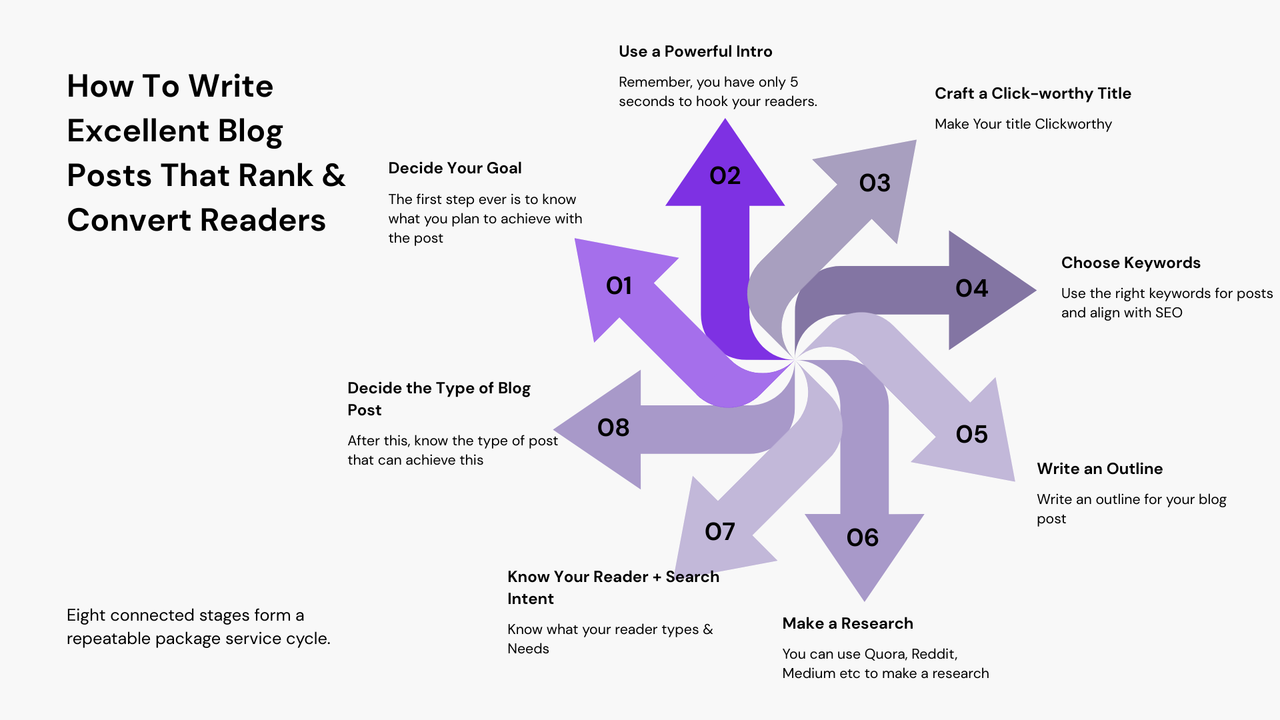
Step 1: Decide on Your Goal
Before you even write a blog post, there must be some sort of intention or goal behind the post.
What is this post aimed at?
Should readers feel understood just by reading this post or should they be informed?
Do I want this post to teach, inspire, or convert?
What action do I want my reader to take?
Clarity here sets the tone for everything else. Once you're done, put down your goals on paper for clarity.
Step 2: Decide the Type of Blog Post you want to write
Your goal should naturally lead to this. There are like 30+ different kind of blog posts. Here you should be considering if you're going to teach readers to do something (in which case you write a how-to) or if you just want to inform them by listing out a set of things (Here you write a listicle). The types of blog posts include, listicle, how to, ultimate guides, product reviews, affliates post etc.
If you're goal is to inform, educate or establish then pick the right type of blog post for that.
Step 3: Know Your Reader + Search Intent Before a word hits the page:
Identify your reader’s pain points, desires, and awareness level. This will help in incorporating the right words to readers at the right time.
Match search intent and emotional intent.
Make them feel like this post was written just for them. This where you make a big difference from other blogs posts out there and truly stand out in detail.
Step 4: Make a Research
Studies have shown that blogs with original research perform better. I mean you can't just wake up one morning and tap away at a screen like it's your fuel. You must observe and learn first before you write for excellence.
41% of bloggers create content based on original research, and those who do are more likely to see better results (traffic, engagement, rankings).
Again, In-depth (long and research-driven) content gets more traffic.
Studies show:
Articles greater than 3,000 words (typically more researched) can get 138% more traffic than short posts under 500 words. Which proves that a little bit of research, offers even more value.
Top-performing posts are significantly longer than low-performers, reflecting depth and thoroughness. Once you're done writing you can count your words with Stilest. I recommend at least 1500-2,000 words of blog post for a good one.
After you're done defining the goal & audience,
for instance, "to teach bloggers (beginners and intermediate) how to gather credible information and ideas for blog posts".
Your audience automatically becomes
People starting blogs, content creators, or those struggling with writer’s block.
Definitions (e.g., what constitutes research), types of content, research importance and collect references from Wikipedia for credibility links.
Forums & Communities
Now, this one's my favorite, there's Reddit then there's also Quora, Medium etc.
You can search for “ processes” or “ find sources for blog posts” you can also learn from and answer daily questions that help you grow and become a better writer.
Writing forums like Absolute Write, ProBlogger forums and other important places also help as they capture realquestions, struggles, and tips from experienced bloggers.
-“Content Research Techniques” and as you do so take note of the step-by-step processes, tools recommended and examples they give.
Step 5: Write an Outline
This is the typical format for all kinds of blog posts. Special posts might differ a little.
1. Title / Headline
Remember the process I gave you at first about writing a title? Use it over here and make it attention-grabbing and emotional.
Include the main keyword and promise a benefit or solution.
Example: “7 Easy Steps to Beat Anxiety and Feel Calm Today”(Solution + Problem + Aftermath) You could also use the copywriting tricks I mentioned above.
2. Introduction
Start with a question, fact, statistic, or story.
What pain point does your reader have?
Preview solution should answer the question, what will they learn or gain by reading?
Keep it short and punchy (2–4 sentences). Or you can use the formula below which combines Ann Handley's "so what" principle with a bit of emotion and psychology.
[Shock value question or Life-changingtitbit story] + [Possiblity/Lessons learned] + [ Motivation] + [ Post objective] + [ Reassurance]
Which sounds like this for an intro to a blog: Can you actually make $3,000 monthly as a blogger?I started just where you are, with doubt and about a few months of zero result until I learnt something that changed my story and made me twice of that in a month...
Feel free to complete the rest.
3. Main Body
Organize in sections/subheadings with H2 or H3 tags (wonderful for SEO). Follow this structure for each section:
Subheading / Benefit / Keyword. Explain the point clearly by including examples, tips, stats, or personal stories.
You can also add visuals, bullet points, or quotes. Like your "signature images" mine is the stickman you see. I love to use Canva or Adobe for my designs. Canva for faster and beautiful templates and banners. Adobe for deep illustration and complex designs.
Here's an example structure for a how-to post:
H1: Steps to Develop a Calmer Mind
H2: Step 1: Understand Your Anxiety
H3: What it is, why it happens
• Quick tip or example
H2: Step 2: Create a Calm Routine
H3: Daily habits, practical steps
• Optional graphic or list
Repeat this for all steps.
4. Optional Sidebar / Extras
You can include checklists, bonus tips, FAQs, downloadable PDFs, videos, about me or callout boxes. Which helps ranking, engagement and time on page.
5. Conclusion
Recap key points (short bullets or 2–3 sentences).
Call to action (CTA): Ask the reader to subscribe, comment, download, or share. This is also the perfect point to place email newsletters and subscriptions. I recommend Kit for simpler and quality email form designs and templates. It's about the easiest email integrating platform, I know out there.
Example of a CTA: “Which step will you try first? Comment below, I’d love to hear!”
6. SEO / Meta Section (Optional but Important)
Meta description: Maintain this at 150–160 characters for summarizing the post.
Place keywords naturally placed throughout headings and body. This is crucial! Don't say I didn't tell ya!
Add Alt text for images, don't forget that! If you're asking what an alt text is al, it's basically "a description of your image".
7. Social Sharing & Engagement
Suggested tweetable quotes, pins for Pinterest, or IG snippets.
This encourages sharing and backlinks.
Step 6: Choose the Right Keywords
Don't just use popular ones, use the ones that match intent and use longtail keywords for less competition and more relevance.
Use tools like Google Keyword Planner, Ahrefs, AnswerThePublic.
Sprinkle them naturally through headings, intro, and body.
Step 7: Craft a Click-Worthy Title
Include your primary keyword. Spark curiosity without misleading. And for English sake, write your title in present continous or simple tense. Capitalize all first letters of core words except pronouns, conjunctions and auxillary verbs in titles & subtitles.
For instance:
How to Write Excellent Blog Posts that Rank on Google and Convert Readers.
Step 8: Write a Powerful Introduction
Hook the reader immediately,empathize with their struggle. If you read those four books I mentioned above, you would be a pro in this section. Also make sure to set expectations clearly:
“If you’ve ever spent hours writing a post only to see zero traffic, this post is for you…”
Step 9: Structure Your Blog for Humans & SEO
Use H2s and H3s to break sections, bold and italize keywords and core words.
Use bullet points to list, quotes to represent what someone said, and callouts to emphasize.
These make scanning easy and reading enjoyable.
Step 10: Apply the Four Skills
Storytelling, make content memorable. Copywriting, guide readers to action.
Emotional Writing, connect on a human level. SEO, make Google understand and love your post.
Step 11: Write the Content
Answer the query fully. This part is important.
Use examples, anecdotes, stats, and visuals and one of the most useful writing resource you'll ever have, your research and your insights. Add internal and external links naturally
Keep sentences short and punchy and balance logic and emotion.
🎉Fun Fact
Did you know that the average first-page Google result contains 1,447 words? That means long-form content isn’t just a preference, it’s a secret weapon for ranking higher and keeping readers engaged.
Step 12: Add Calls-to-Action (Soft & Clear)
Encourage readers to:
-Comment
-Share
-Try a tip
-Subscribe (Kit already does this for you)
-Check related posts.
Softly is key, don’t sell in every paragraph. Sounding salesy or gimmickyscares readers off and leaves an inferior impression in the subconscious mind of your readers. Instead, show value enough to make them take action. Remember, action speaks louder than words and the key to writing what people experience is to "show and not tell"
Step 13: Optimize for SEO
- Keyword placement
- Meta description
- Internal + external links
- Readability
- Image alt texts
- Consistency
14: Edit Ruthlessly
Remove fluff and correct grammar, oh! Grammarly is the chief of this. You can also use pro writing aid. Remember capital letters at the beginning of sentences. Reread and edit, check for emotion, read aloud, know your English rules this ensure flow and clarity making each paragraph serve a purpose correctly.
Step 15: Add Finishing Touches
Your visuals should include charts, quotes, callout circles.
Pillar post links for internal navigation and optional affiliate mentions if relevant.
Step 16: Publish & Promote
Share on social media there's so much out there, Pinterest, LinkedIn, Quora, Reddit, Tumblr, Facebook, email lists, and niche communities.
Track engagement, clicks, rankings and update periodically for freshness and long-term authority
Step 17: Submit Your Blog to Google Search Console
Here's how to do so step by step:
Go to Google Search Console
Sign in with the same Google account you used for your blog (or want to manage it with).
Submit Your Sitemap
Inside Search Console,
Click Sitemaps on the left menu
Enter:
sitemap.xml
Click Submit
If you use WordPress + SEO plugin, your sitemap is usually:
https://yourwebsite.com/sitemap.xml
This helps Google crawl all your posts faster.
Submit Individual Blog Post
Click URL Inspection
Paste your blog post URL
Click Request Indexing and wait a while for your post to appear on Google
Do this for new or updated posts.
💡Tip
Every post is a mini masterclass. Write like you’re teaching one reader, optimize like you’re impressing Google, and add value like you’re building trust for years.
If there’s one thing I hope this guide leaves you with, it’s that great blog posts are not accidents.
They’re not written for algorithms alone, and they’re not written only to express yourself. They’re created at the intersection of clarity, intent, emotion, and strategy. When you understand why your post exists, who it’s for, what the reader is feeling, and what should happen next, everything else, SEO, structure, even conversion, starts to fall into place naturally.
Write to answer real questions. Write to guide real people through real moments of confusion, curiosity, or decision-making. When you do that consistently and a hopeful note from me to you, it's definitely not going to be a piece of cake, but it's worth it all, your content won’t just rank, it will stick. It will build trust. It will turn readers into subscribers, and visitors into loyal supporters.
So the next time you sit down to write a blog post, don’t ask, “Will this rank?”
Ask instead, “Will this help someone move forward? If so, how can I optimize it well enough to get to them?”
That question alone can change everything.
I'd love to know your thoughts. What do you have to say after reading this? Please feel free!
A blog post ranks higher when it satisfies search intent, uses well-researched keywords naturally, has strong on-page SEO (headings, meta tags, internal links), and offers genuinely helpful, in-depth content. Google favors posts that keep readers engaged and answer their questions clearly.
There’s no fixed word count, but most high-ranking blog posts fall between 1,500–2,500 words. The key isn’t length, it’s completeness. A post should fully cover the topic without fluff while providing clear value to the reader.
Search intent is the reason behind a user’s query, whether they want information, a solution, or to make a purchase. Blog posts that match intent rank higher because they give readers exactly what they’re looking for, reducing bounce rates and increasing engagement.
Consistency matters more than frequency. Publishing 1–2 high-quality posts per week is enough for most blogs. It’s better to publish fewer, well-optimized posts than many low-quality ones.
Absolutely. Many top-ranking blog posts are written by beginners who focus on research, clarity, and user value. You don’t need to be an expert,you need to be useful, organized, and intentional with SEO basics..
Most blog posts take 3–6 months to gain traction, depending on competition, domain authority, and content quality. SEO is a long-term strategy, but well-written posts can bring consistent traffic for years once they rank.
Yes. Linking every instance of the same keyword isn’t recommended and can look spammy. Instead, link the keyword naturally the first time it appears (or where it adds the most value), then use plain text or variations elsewhere to keep your content clean and user-friendly.
Was this post helpful?
☆0
Discover a Blogging Secret to Upgrade your Blog Today!
🎊 Blogging Secret Discovered!
What would you like me to write about next?
Hi, I’m Southe Coaste 💜
A med student by midday and a writer by midnight. When I'm not drawing complex anatomical drawings or writing another epic scene, I'm tending to my sweetheart (my Aloe vera).

-20260119-171439-0000.jpg)











Comments
Post a Comment
“💌 I’d love to hear your thoughts! Leave a comment below and let’s chat. Your feedback, ideas, or questions are always welcome.”